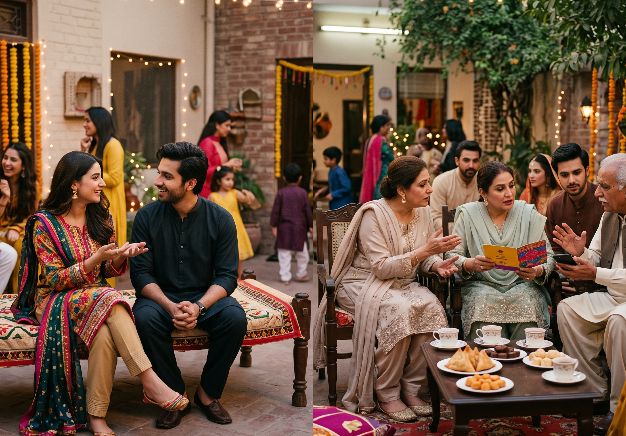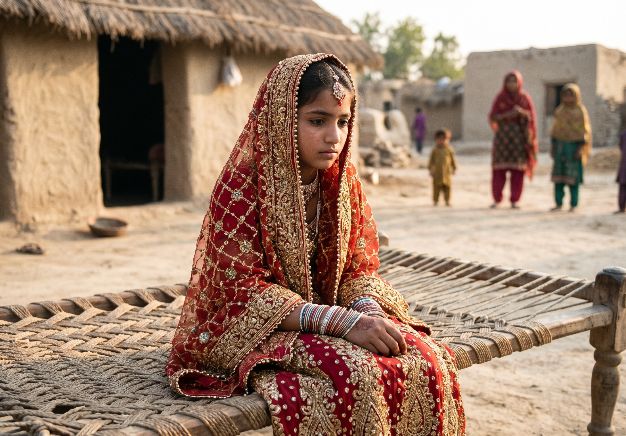


Marriage is a partnership between two individuals who agree to build a life together. For a marriage to succeed, both partners must contribute equally, showing understanding, commitment, and respect for one another. Traditionally, in many societies, a woman leaves her parental home after marriage and moves in with her husband's family. However, there are situations where the opposite happens, and the husband moves into his wife's family home. In South Asian cultures, such a man is commonly referred to as a “Ghar Damad.”The term exists across the subcontinent in different languages and pronunciations. In Hindi, it is known as Ghar Jamai; in Urdu, Ghar Damad; and in Punjabi, Ghar Jawai. Although the words differ, they all refer to the same arrangement: a son-in-law living with his wife's family.

One important question is why the term “Ghar Damad” is often treated humorously or viewed negatively, even though there can be many serious and practical reasons for such an arrangement. Several circumstances may lead a husband to live with his wife's family. In some cases, the man may not have close family members of his own and may choose to become part of his wife's household so that both partners can enjoy the support and warmth of a family environment. In other situations, the woman may be her parents' only child or have family responsibilities that make her presence at home essential. Elderly parents, health concerns, or household obligations may make it difficult for her to leave her family home after marriage.
In today's globalized world, another increasingly common reason is international marriage. Sometimes a man marries a woman from another country and chooses to live with her family, either temporarily or permanently. In such cases, practical considerations such as immigration, employment opportunities, or family support can influence the decision. As a result, the concept of an “international Ghar Damad” is becoming more common than ever before.
Responsibilities and Respect Matter

Just as a woman must adjust to life in her in-laws' home after marriage, a man who chooses to live with his wife's family also has certain responsibilities. He must respect the household, care for family members, and contribute positively to the family environment. Understanding boundaries, respecting privacy, and maintaining healthy relationships with all family members are essential for creating harmony within the home.
A successful Ghar Damad arrangement depends on mutual respect and acceptance. Family members should view the new member of the household as a blessing rather than a burden. Similarly, the husband should strive to become a supportive and caring part of the family. Most importantly, he deserves the same dignity, respect, and affection that society expects a wife to receive in her marital home.
Changing Perspectives

As societies evolve, traditional ideas about marriage and family living arrangements are gradually changing. The decision about where a couple lives should be based on their circumstances, responsibilities, and mutual agreement rather than social stereotypes. A husband living with his wife's family does not make him less capable, less independent, or less respectable. Every family situation is unique, and what truly matters is the strength of the relationship, the happiness of the couple, and the respect they show to one another.
Instead of treating the term “Ghar Damad” as a joke, society should recognize that it can be a practical and thoughtful decision made for the well-being of both families. After all, successful marriages are built on understanding and cooperation, not on where the couple chooses to live.