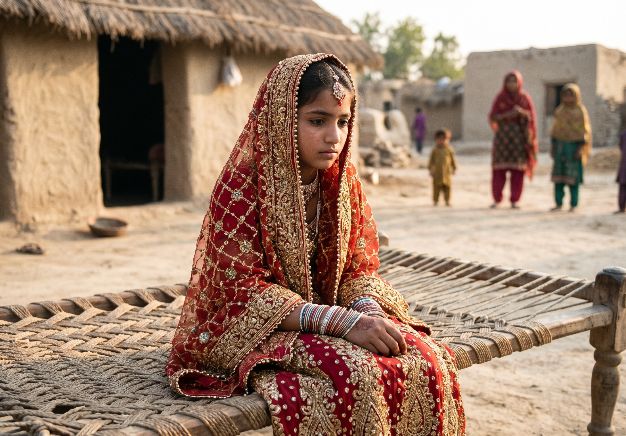

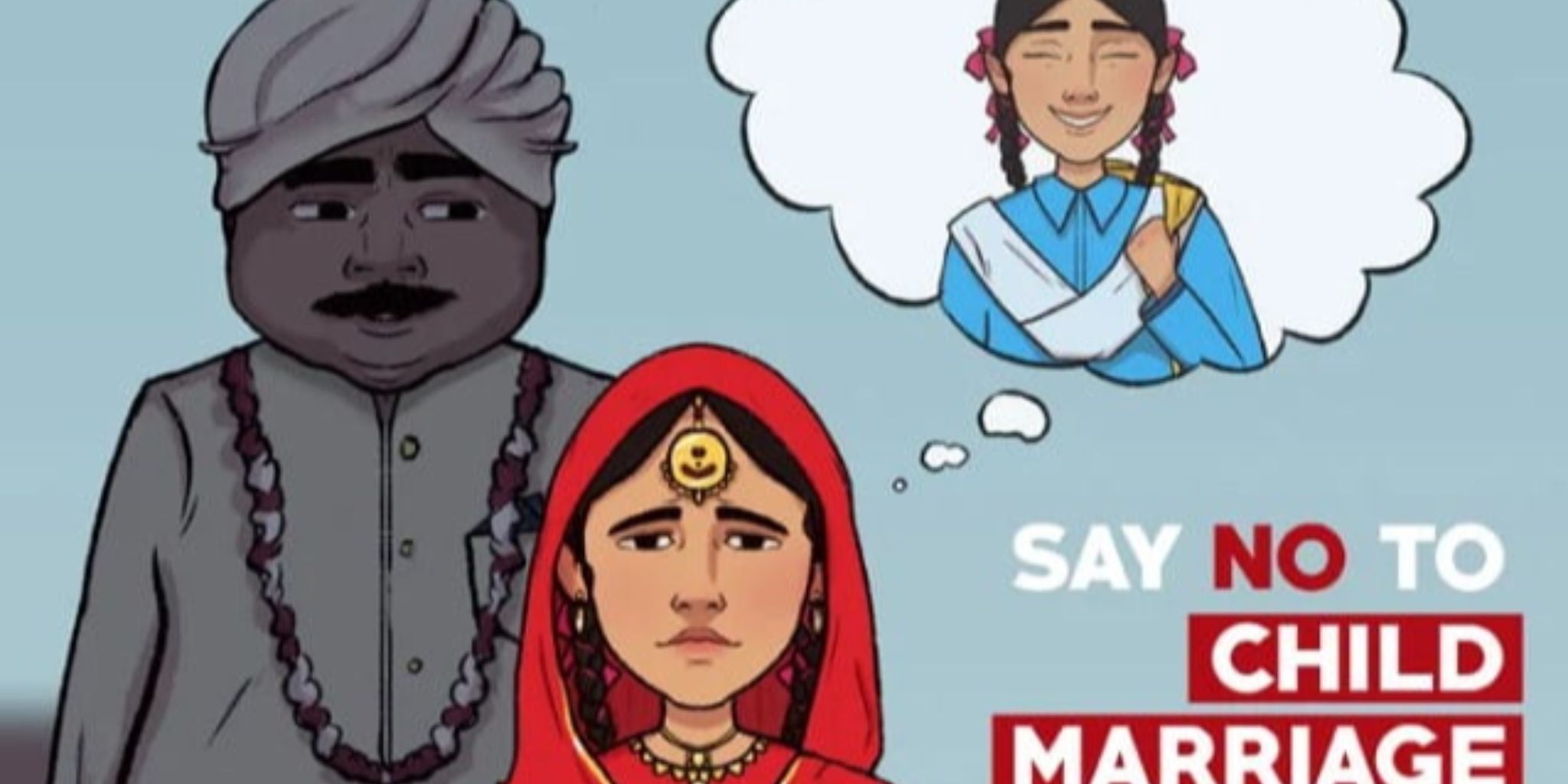
Child marriage is an issue that has been deeply rooted in Pakistan’s social structure for decades. It is not merely a legal or judicial matter; it is a human tragedy hidden behind stories of suffering, suppressed emotions, and shattered dreams. Every child bride represents a silent cry that affects not only her own life but also her family and society as a whole.
This issue cannot be understood through statistics alone, because behind those numbers lie heartbreaking realities. In Pakistan, approximately 19 million girls are married during childhood. Every sixth girl is deprived of her childhood, education, and freedom. Dreams that were yet to flourish and aspirations that were just beginning to take shape are often buried before they have a chance to grow.
Many of these young girls are confined within the walls of their homes at an age when they should be learning, exploring, and building their futures. They are denied the opportunity to pursue education, understand life, and make decisions for themselves. According to available statistics, around 18% of girls are married before the age of 18, while 4% become brides before reaching the age of 15. Such marriages not only cause lifelong difficulties for these girls but also hinder the social and economic progress of society.
For many years, efforts have been made to address this serious issue, and child marriage legislation has finally been introduced and approved. The bill has been passed by both the National Assembly and the Senate, marking an important step forward. However, real success will depend on the effective implementation of these laws.
Ban on Child Marriage: Why Does It Matter?

According to the Child Marriage Restraint Bill, the registration of marriages involving individuals under the age of 18 has been declared a criminal offense. Marriage registrars are legally prohibited from registering such marriages. Before conducting a marriage ceremony, the officiating person must verify the computerized national identity cards of both parties.
Anyone who registers or solemnizes a marriage without proper documentation may face up to one year of imprisonment, a fine of PKR 100,000, or both. Marrying a girl under the age of 18 has also been classified as a criminal offense. An adult man who marries an underage girl may face a minimum sentence of two years and a maximum of three years of rigorous imprisonment, along with financial penalties. The bill further states that any marriage involving a minor, whether with or without the child’s consent, will be treated as an act equivalent to sexual abuse. Any individual who persuades, encourages, forces, or compels a minor to marry will also be considered guilty of abuse.
Those who arrange or facilitate the marriage of a minor may face imprisonment ranging from five to seven years, a fine of up to PKR 1 million, or both. Employing a child for the purpose of arranging a marriage is also punishable by imprisonment of up to three years and additional fines. Parents and guardians who participate in or permit the marriage of underage children will also face legal consequences. Under the bill, they may be sentenced to up to three years of rigorous imprisonment along with fines.
Furthermore, forcing a minor to leave their area or relocating them for marriage will be treated as child trafficking. Individuals convicted of such offenses may face five to seven years of imprisonment and substantial fines. To ensure timely justice, courts will be required to resolve child marriage-related cases within 90 days. Pakistan already has numerous laws designed to address social issues, and new legislation continues to be introduced. However, laws alone cannot solve problems. Public awareness and education are equally important. Society must understand the harmful consequences of child marriage and recognize the importance of complying with these laws. Only through effective implementation, awareness campaigns, and collective social responsibility can Pakistan hope to eliminate child marriage and protect the rights and futures of its children.
.