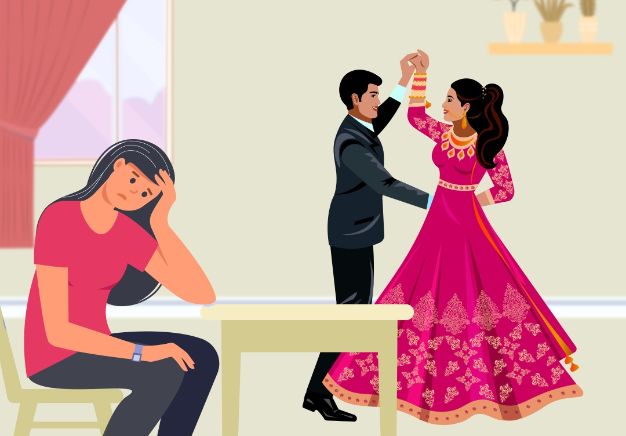


A remarkable story from Kuwait once made headlines around the world. It is considered one of the shortest marriages in history. After a judge completed a couple’s marriage ceremony in a Kuwaiti court, the newlyweds began leaving the courtroom. As they walked out, the bride accidentally slipped. Instead of helping her, the groom mocked her and called her “stupid.”The bride immediately realized the level of respect and importance she held in her husband’s eyes. Within three minutes of the marriage ceremony, she returned to the same judge and requested an annulment. The judge approved her request, and the marriage was dissolved on the spot. When the story spread across social media, many users supported the bride’s decision, arguing that if a person behaves disrespectfully at the very beginning of a marriage, the future of the relationship may be even more troubling.
While most couples spend months or even years thinking before deciding to end a marriage, studies show a clear trend in many countries: women are more likely than men to initiate divorce. What are the reasons behind this pattern? Let’s explore some of the key factors.
Increased Financial Independence

One of the most significant reasons women initiate divorce is their growing financial independence. In the past, many women remained in unhappy or unhealthy marriages because they lacked the financial resources to support themselves and their children.
Today, more women have access to education and employment opportunities, allowing them to earn their own income. Economic independence gives women the confidence and ability to leave relationships that are emotionally damaging, unfulfilling, or abusive. They are no longer forced to remain in difficult situations solely for financial security.
Lack of Emotional Connection

Many women enter marriage with expectations of emotional companionship, understanding, and support. However, these expectations are not always met.Relationship experts suggest that women often place a higher value on emotional intimacy and communication within marriage. When they feel unheard, neglected, or emotionally disconnected from their spouses, dissatisfaction can grow over time.
Women are also generally more likely to discuss relationship problems openly and recognize signs of distress within a marriage. Because of this awareness, they may be more proactive in addressing issues and, if those issues remain unresolved, more likely to consider separation or divorce.
Influence of Friends and Family

Women often maintain stronger social support networks than men. They are more likely to have close friends and family members with whom they can openly discuss personal challenges, including marital problems.
These support systems can provide emotional guidance, practical advice, and encouragement during difficult times. Having trusted people to turn to may help those who have decided to leave an unhappy marriage feel less overwhelmed and more manageable.
In contrast, men are often less likely to seek emotional support from friends, which can affect how they approach marital difficulties.
Unequal Household Responsibilities

Another major factor is the unequal distribution of household labor. Even in households where both spouses work full-time, women frequently perform a larger share of domestic tasks such as cooking, cleaning, childcare, and caregiving. Managing a career while carrying most of the household responsibilities can lead to stress, exhaustion, and resentment. When women feel that their efforts are not recognized or that responsibilities are not shared fairly, marital satisfaction may decline.
Research consistently shows that couples who share household duties more equally tend to experience healthier and more stable relationships. Fairness and mutual support can significantly reduce conflicts and strengthen marital bonds.
Divorce is rarely a simple decision. It is often the result of a combination of emotional, financial, and social factors that develop over time. Women's increasing financial independence, unmet emotional expectations, strong support networks, and unequal household responsibilities all contribute to the higher likelihood of women initiating divorce.
However, understanding these factors is not about assigning blame. Instead, it highlights the importance of mutual respect, emotional connection, open communication, and shared responsibilities within marriage. When both partners work together as equals, they create a stronger foundation for a healthy and lasting relationship.