

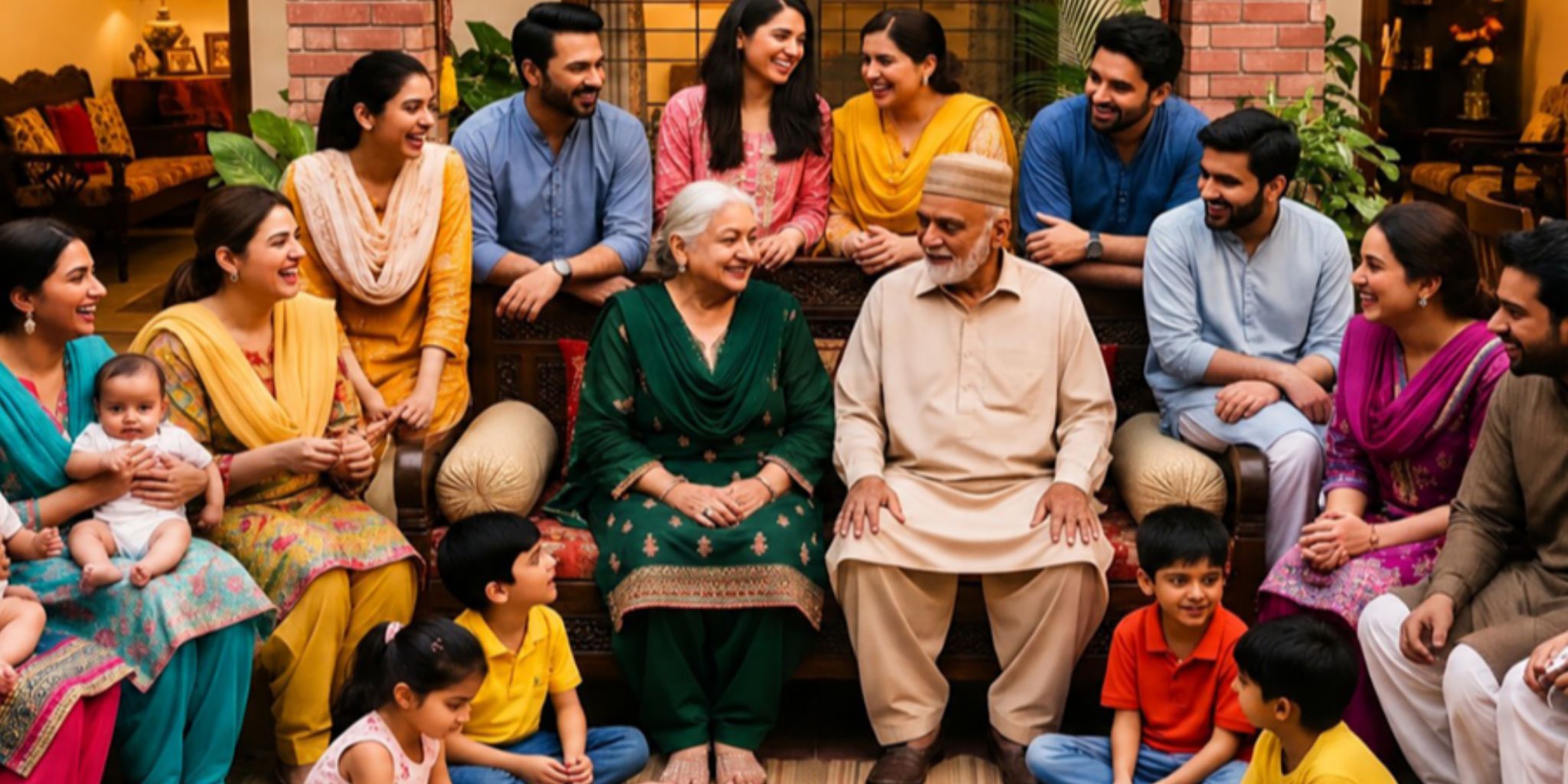
Human beings are often described as social creatures. Most people do not want to live in isolation and, for many reasons, feel the need for family support throughout their lives. Around the world, two major family systems exist: the joint family system and the nuclear family system.
In a nuclear family system, a person lives with their spouse and children as an independent household. In a joint family system, several families live together under one roof, usually under the guidance of a family head. While the nuclear family system is more common in most parts of the world, the joint family system remains prevalent in South Asian countries such as Pakistan and India, where multiple generations often share the same home.
Over time, people's attitudes toward family structures have changed. Today, many people openly question the practicality of the joint family system, while others continue to support it. This blog explores the advantages and challenges of both systems to help couples make informed decisions after marriage.
Advantages of the Joint Family System

One of the biggest social challenges in many developed and Western countries today is loneliness. As people increasingly choose independent lifestyles, social isolation has become more common. The joint family system, however, provides a strong sense of belonging and companionship.
Whether it is a time of happiness or hardship, family members are there to support one another. Older family members can offer valuable advice, emotional support, and practical guidance based on their life experiences. This is especially beneficial for working couples, who often feel reassured knowing that trusted family members are available to help care for their children.
Children raised in a joint family environment may also learn important social values such as sharing, cooperation, respect for elders, and responsibility toward younger family members. Living together allows them to develop stronger interpersonal skills and a deeper understanding of family relationships.
Another significant advantage is financial stability. Since several families share living expenses, costs such as housing, utilities, and household necessities can be divided among multiple earners. In today's challenging economic conditions, this arrangement can make life more affordable and financially secure.
Challenges of the Joint Family System

While joint families offer many benefits, they can also present difficulties. In many households, the family head holds decision-making authority, which may limit other members' independence. Couples often feel that they cannot make important personal decisions freely. Privacy is another common concern. When multiple families share the same living space, individuals may struggle to maintain personal boundaries. Many people feel they cannot live according to their own preferences because others constantly influence their daily lives.
Differences in personalities, values, and lifestyles can also lead to misunderstandings and conflicts. Disagreements among adults often affect children, while disputes between children can sometimes escalate into tensions among parents. As a result, the home environment may become stressful rather than peaceful. Problems can become even more pronounced when responsibilities are not shared fairly. If some family members contribute less while benefiting equally from shared resources, resentment may develop among others. Those who prefer a peaceful life may find themselves drawn into family politics and disputes against their wishes.
What Do Islamic Teachings Suggest?
Islam does not explicitly require either a joint family system or a nuclear family system. However, Islamic teachings place great importance on privacy, individual rights, and clear responsibilities. Historical accounts indicate that the wives of Prophet Muhammad (PBUH) had separate living quarters, suggesting the importance of maintaining privacy within family life. Islam also emphasizes modesty and the observance of hijab, which can become more challenging in some joint family arrangements where non-mahram relatives are present.
Financial responsibilities are another important consideration. In some joint family systems, financial contributions and obligations may not always be clearly defined, potentially leading to misunderstandings or feelings of unfairness among family members. Furthermore, parents may find it more difficult to exercise complete responsibility for the upbringing of their children when many people influence the household environment. Islam encourages accountability and personal responsibility, principles that can sometimes be harder to maintain in a large, shared family structure.

That said, the joint family system is not prohibited in Islam. If family members can maintain mutual respect, ensure privacy, fulfill responsibilities fairly, and avoid conflicts, living together can be a positive and rewarding experience. There is no single answer to whether a joint family system or a nuclear family system is better after marriage. The right choice depends on the personalities, expectations, financial circumstances, and family dynamics involved.
A joint family can provide emotional support, companionship, and financial benefits, while a nuclear family often offers greater privacy, independence, and freedom in decision-making. Couples should carefully evaluate their own needs and circumstances before deciding which family structure is best for them. Ultimately, a successful family life depends less on the type of family system and more on mutual respect, understanding, responsibility, and effective communication among all family members.