
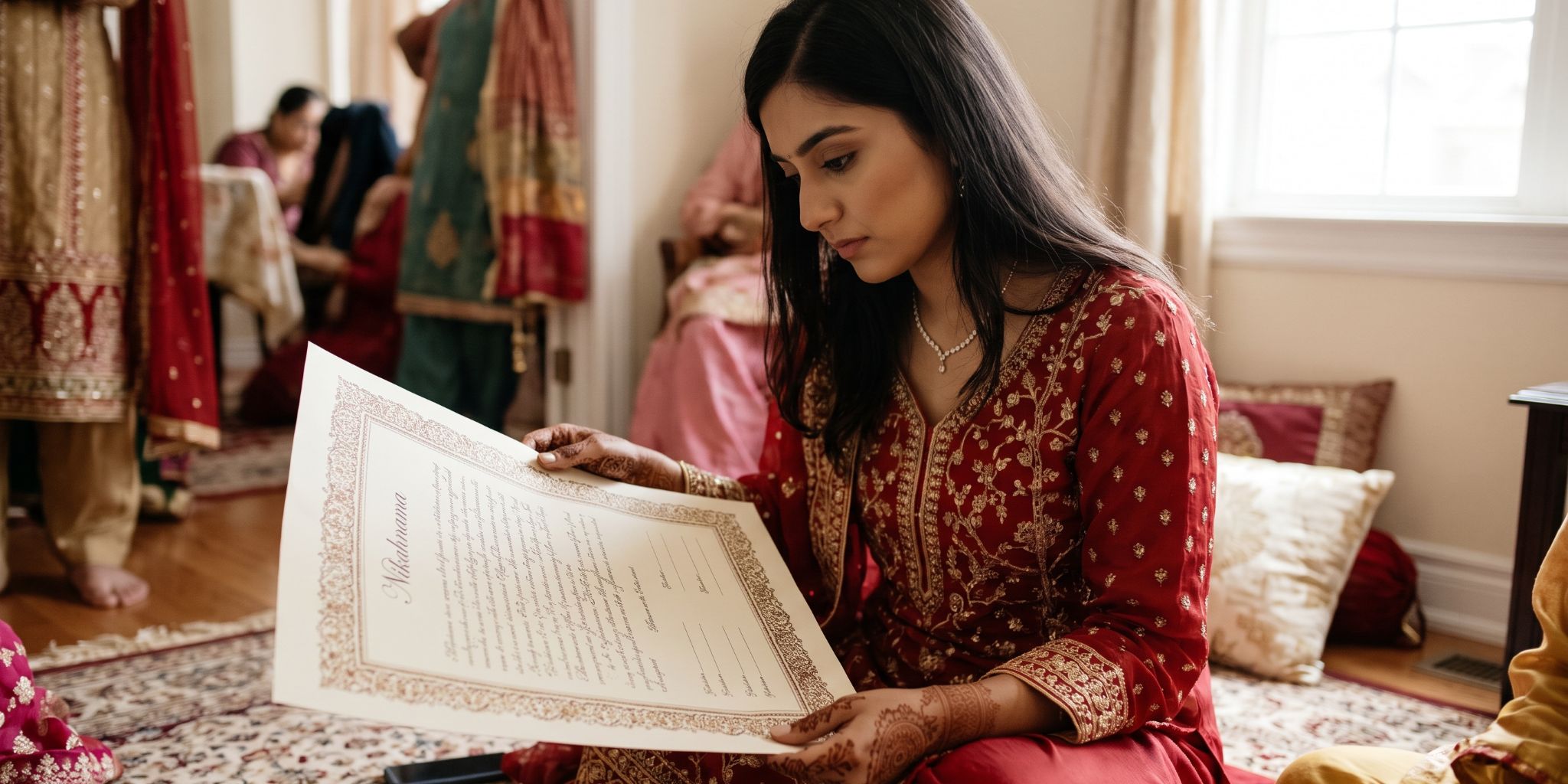
Marriage is one of life's most important decisions, bringing two individuals and their families together in a lifelong commitment. While wedding preparations often focus on clothes, jewellery, venues, and celebrations, one essential detail which frequently overlooked is the Nikahnama. Understanding this document before signing is not just a formality; it is an important step toward protecting both partners' rights and interests.
Recently, former Pakistani supermodel and actress Vaneeza Ahmed highlighted this issue and advised women not to get married without carefully reading their Nikahnama. Speaking on a programme hosted by Vasay Chaudhry, she revealed that despite being educated, she had not properly read her own marriage contract until she faced difficulties during her divorce. Her experience has once again drawn attention to the importance of awareness about marriage rights in Pakistani society.
Vaneeza Ahmed's Important Advice to Women
Vaneeza Ahmed's remarks highlight a common problem in traditional wedding arrangements. In many families, the Nikahnama is treated as a routine document that needs to be signed during the marriage ceremony. The bride may be asked to confirm her consent and acknowledge the agreed Haq Mehr, while other clauses receive little attention or explanation.
Ahmed encouraged women to read the document carefully and ask questions about any conditions they do not understand. She also urged parents to educate their daughters about the importance of knowing their rights before marriage. According to her, some provisions concerning women's rights may be omitted or crossed out, making it essential for families to examine the document rather than signing it without reviewing its contents.
Her message is simple but powerful: marriage may be a matter of destiny, but understanding your rights and responsibilities is a practical step that should never be ignored.
Important Clauses Every Bride Should Understand
Before signing a Nikahnama, a bride should take the time to understand its important sections. If anything is unclear, she should seek an explanation from the Nikah Registrar or a qualified legal professional.
Haq Mehr is an important financial right of the wife under an Islamic marriage contract. The agreed amount and the terms of payment should be clearly understood and accurately recorded. The bride should know whether it is payable immediately or deferred, as well as any other relevant details.
The Nikahnama contains a provision concerning the delegation of the right of divorce to the wife. Women should understand what this provision means, whether the right has been granted, and what conditions may apply. Since the legal effect of particular wording can be significant, professional advice may be helpful when necessary.
Financial arrangements and the husband's responsibilities towards his wife should not be treated as insignificant details. Couples should understand their respective obligations and seek clarification about any relevant provisions in the contract.
The marriage contract provides space for certain agreed conditions. Depending on the circumstances, couples may wish to discuss matters such as living arrangements or other expectations that are important to their married life. Any proposed condition should be clearly worded and reviewed to ensure that it is legally appropriate.
The Nikahnama also includes questions and provisions concerning matters such as an existing marriage and permission for another marriage, where applicable. Women should understand what is recorded in these sections instead of assuming that every box has been completed correctly.
Reading the entire document is important because each section may have a different purpose. No bride should feel pressured to sign a document she has not had a reasonable opportunity to understand.
Why Do Women Hesitate to Ask Questions?
In Pakistan, marriage is often considered a family matter, and wedding preparations can involve considerable social pressure. A bride may hesitate to ask questions about the Nikahnama because she fears that discussing financial rights, divorce, or special conditions could create a negative impression of her or her family.
Some parents may also avoid these conversations because they believe that raising such matters before marriage is inappropriate or unnecessary. As a result, important questions may remain unanswered until a problem arises.
This hesitation needs to change. Asking about the terms of a marriage contract does not mean that a woman expects her marriage to fail. It means that she wants to understand the commitments she is making and the rights available to her.
The same principle applies to men. Both partners should know what they are agreeing to, understand their responsibilities, and approach the marriage contract with honesty and respect.
The Role of Parents in Protecting Their Daughters' Rights
Parents play an important role in preparing their children for married life. While families often spend months arranging wedding functions and selecting suitable proposals, discussions about the Nikahnama should receive equal attention.
Parents should encourage their daughters to read the document themselves and ask questions without embarrassment. They should ensure that the agreed terms are accurately recorded and that no section is altered or left incomplete without their knowledge.
Most importantly, families should avoid treating a bride's questions about her rights as a sign of distrust. A marriage built on understanding and mutual respect benefits both individuals.
Educating daughters about marriage contracts is not about creating fear or encouraging conflict. It is about helping them enter a new phase of life with confidence, awareness, and the ability to make informed decisions.
Vaneeza Ahmed's advice has renewed an important conversation about women's awareness of their rights in Pakistan. Her personal experience serves as a reminder that education alone does not guarantee awareness of the legal and practical details of marriage.
Every bride should have the opportunity to read and understand her Nikahnama before signing it. Parents, prospective spouses, and marriage registrars also have a responsibility to encourage transparency and ensure that the agreed terms are properly recorded.
Marriage is an important life decision, and its preparations should go beyond wedding celebrations. Taking the time to understand the Nikahnama is a sensible step towards a relationship based on informed consent, trust, and respect.
Before saying yes to a new chapter of life, make sure you understand the document that records your marriage. Knowing your rights should be a normal part of every wedding, not a lesson learned after a problem arises.